


Dental Health (click)

Information about dental and oral cavity health. Keep your smile shiny and healthy.

General Health (click)

Explore the world of your health. Find news, article, tips, and healthy lifestyle.

Health and Celebrity (click)

Lot of stories about your favorite stars and their health.


Dapatkan buku kami "Serba-Serbi Kesehatan Gigi & Mulut" di toko buku terdekat. Diterbitkan oleh penerbit buku anak muda Bukune. Selengkapnya: Buku: SERBA SERBI KESEHATAN GIGI & MULUT

Showing posts with label Dentistry. Show all posts

New Methode To Treat Dry Mouth

Posted by drg Ardyan Gilang Rahmadhan On 7:22 PM 0 comments

dry desert
New approach for treating xerostomia (dry mouth) condition has been published in the October 2010 issue of The Journal of the American Dental Association (JADA), conducted at New York University's College of Dentistry. The study in this journal has confirmed about the safety and efficacy of the new methode.

With double masked, randomized controlled crossover study, researcher concludes that use of a unique mucoadhesive patch, affixed to the hard palate inside the mouth, provides statistically significant and sustainable improvements in salivary flow rates and subjective moistness for dry mouth sufferers.

And it showed that these patches provided better performance for dry mouth sufferers than a leading over-the-counter dry mouth spray.

The patches on this study are available to consumers under the brand name OraMoist. It is about one centimeter in diameter, and it can adhere to any oral mucosal surface, such as the roof of the mouth or inside the cheek. The study confirmed can yield a "statistically significant improvement in baseline subjective and objective measures of dry mouth for up to 60 minutes and maybe longer after application."

The researcher also found that after two weeks of daily use, participants experienced a statistically significant improvement in baseline subjective and objective measures of salivary flow.

"One of the results was that after two weeks of use of the patch, the amount of saliva in the mouth had increased even during times when there was no patch in the mouth," says the study's lead author A. Ross Kerr, DDS, MSD, clinical associate professor at New York University College of Dentistry. "In other words, the patch would seem to have a cumulative beneficial effect," add Kerr.

Chronic xerostomia or dry mouth is an under-diagnosed condition that can have a bad effect on oral health. This condition was contributing to tooth decay, gum disease and chronic bad breath. It can be a symptom of other medical conditions, such as diabetes or Sjogren's Syndrome, and is also the result of radiation treatment for head and neck cancer, but it is most often a side effect of many prescription and over-the-counter medications taken daily.


Medical News Today: New Approach For Treating Dry Mouth Presented In JADA-Published Study

Continue reading “New Methode To Treat Dry Mouth”  »»
Bookmark and Share

Bone Loss Around Dental Implants Are Now More Common

Posted by drg Ardyan Gilang Rahmadhan On 1:06 AM 0 comments

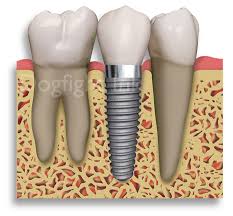
dental implant
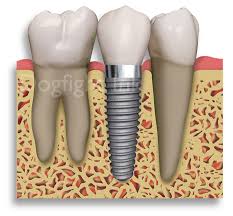
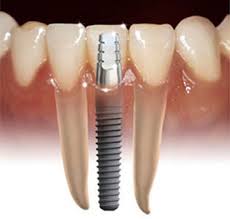
Thesis from the Sahlgrenska Academy at the University of Gothenburg, Sweden, revealed that bone loss around dental implants is far more common than previously realised. About one in four patients loose some degree of supporting bone around their implants.

From 600 patients X-rays analysis, they found that more implants a patient had in the jaw, the more common it was to find loss of supporting bone. And over a quarter 28 per cent of patients had lost some degree of supporting bone around their implants.

Christer Fransson, dental surgeon consultant said, "Contrary to what we had previously assumed, the bone loss in these patients was not linear, but instead accelerated with time." It is important to detect and treat bone loss around implants at an early stage, said him.

One of several factors that increase the risk of bone loss is smoking. In the study smokers had more implants with bone loss than non-smokers.
dental implant

The study also shows that the soft tissues surrounding an implant with bone loss is often inflamed. "In that way we can notice early signs of inflammation and treat it before the bone loss has any serious consequences," said Fransson.


Source: One In Four Patients Have Lost Bone Around Their Implants


Continue reading “Bone Loss Around Dental Implants Are Now More Common”  »»
Bookmark and Share

One Step Closure To Engineering Tooth Enamel

Posted by drg Ardyan Gilang Rahmadhan On 4:40 AM 1 comments

tooth enamel
We knew that teeth enamel can not regrow or repair themselves if they get damaged. But now, scientists have founded a simple amino acid that could be the clues on how to engineer tooth enamel.

This amino acid is called proline, and it is repeated in the centre of proteins found in tooth enamel. When the repeats are long, such as in humans, they contract groups of molecules that help enamel crystals grow. When the repeats are short, such as in frogs, teeth don't have the enamel prisms that provide strength, the researchers explained.

'We hope that one day, these findings will help people replace lost parts of the tooth with a healthy layer of new enamel,' said Tom Diekwisch, the lead researcher professor and head of oral biology at the University of Illinois at Chicago College of Dentistry. But this finding may also give benefits beyond the teeth.
tooth enamel

Diekwisch added, 'Proline repeats are amazing. They hold the key to understanding the structure and function of many natural proteins, including mucins, antifreeze proteins, Alzheimer's amyloid and prion proteins. We hope that our findings will help many other important areas of scientific research, including the treatment of neurodegenerative diseases.'


Source: New findings may aid engineering of tooth enamel


Continue reading “One Step Closure To Engineering Tooth Enamel”  »»
Bookmark and Share

The First Gum Disease Vaccine

Posted by drg Ardyan Gilang Rahmadhan On 10:04 PM 0 comments

gum disease
A new vaccine that will treat periodontitis for the first time is being developed. This vaccine will be available to dentist office if human trial study are a success.

The vaccine in is the advanced stages of development and is sealing a deal with a global vaccine maker that would initially support further and expanded research, said Australian drug makers CSL. An experimental vaccine is being trialled in mice and, if successful, will proceed to clinical trials in humans within three to four years.

According to the company's chief scientific officer, Dr Andrew Cuthbertson, this study has taken over 10 years to develop the vaccine to this stage.

"CSL is pleased to advise of an agreement with Sanofi Pasteur to undertake a funded program to develop a vaccine for the treatment of periodontal disease caused by Porphyromonas gingivalis," said him.

He also said that the research could also now be expanded to incorporate an antibiotic gel, to be developed alongside a vaccine, for the treatment of those with existing infection.

The research has been continuing in a collaboration between the University of Melbourne and CSL, under the Cooperative Research Centre (CRC) for Oral Health Science.

Professor Eric Reynolds, who is head of the university's dental school and chief of the CRC, said the development of specific products to kill off the bacteria or prevent the gum infection would be a significant oral health breakthrough.

gum disease
"Periodontitis is a serious disease and dentists face a major challenge treating it, because most people will not know they have the disease until it's too late," said him.


Source: First ever gum disease vaccine underway


Continue reading “The First Gum Disease Vaccine”  »»
Bookmark and Share

Enhances Bone And Tissue Growth With Platelet-rich Plasma

Posted by drg Ardyan Gilang Rahmadhan On 10:41 PM 0 comments

dental implant
Platelet-rich plasma therapy (PRP) that has been gaining acceptance in orthopedics and sports medicine, now is also showing strong potential for accelerated healing of dental implant procedures. This therapy can accelerate bone and tissue growth and wound healing and help assure long-term success of dental implant placements.

James Rutkowski, DMD, PhD, reported at the recent annual scientific meeting of the American Academy of Implant Dentistry that PRP treatments could jump start bone growth and implant adherence in just two weeks, which cut down the time between implant placement and affixing the permanent crown.

Platelet-rich plasma is obtained from a small sample of the patient's own blood that was centrifuged to separate platelet growth factors from red blood cells. The concentration of platelets could trigger rapid growth of new bone and soft tissue.

"There is very little risk because we are accelerating the natural process in which the body heals itself," said Rutkowski. "PRP speeds up the healing process at the cellular level, and there is virtually no risk for allergic reaction or rejection because we use the patient's own blood."

In dental surgery, PRP is mixed as a gel that can be applied directly in tooth sockets and other sites. Growth factors in PRP preparations help the grafts bond faster with the patient's own bone. In one of his study, there was increased radiographic bone density during the initial two weeks following PRP treatment when compared to sites that did not receive PRP treatment, Rutkowski reported.


Source: Platelet-rich Plasma Enhances Bone And Tissue Growth For Dental Implants


Reblog this post [with Zemanta]

Continue reading “Enhances Bone And Tissue Growth With Platelet-rich Plasma”  »»
Bookmark and Share

Dental Anxiety Related To Bad Oral Health

Posted by drg Ardyan Gilang Rahmadhan On 5:00 PM 2 comments

dental anxiety
Researchers from the University of Otago, New Zealand, found that people with bad oral health are increasingly likely to have anxious personalities, especially dental anxiety problem.

In this study, more than 1,000 participants between the ages of 15 and 32 were studied. The researcher discovered around a quarter of them had dental anxiety condition.

The participants were divided into groups:
people who had experienced dental anxiety throughout their lives (stable anxious)
people who became dentally anxious as a teen (adolescent-onset anxious)
people who became dentally anxious as an adult (adult- onset anxious).

The stable anxious group had all experienced tooth decay around 5 years old, the adult-onsets had lost teeth around the age of 26 to 32, and teen-onsets had their issues at around 15 years old.

Professor Murray Thomson, research leader, examined the characters of the dentally anxious participants and he found that they usually had a 'glass-half-empty' approach to life and usually were anxious about several things – heights, spiders etc.

Usually people become increasingly anxious through constantly steering clear of the dentist until their dental situation became much worse, he said.

The professor made the point that by this time the anxious patients would need the more unpleasant treatments that then reinforced their anxiety and would push them to further limits to avoid the dentist when new problems arose.

It was found that the stable anxious group would have around 22 missing, decayed or filled teeth by 32-years-old, when non-anxious people would have around 13.

The study also discovered that some people became dentally anxious as a teen but as they got older, they became less anxious.

Peoples with dental anxiety are so afraid of dental visit. They would evade treatment at all costs until the situation became really serious.

dental anxiety
Professor Thomson claimed that the research has implications both for public and dental professionals. It could give dentists an idea of the causes of dental anxiety.

He also said that it was important that the people understood the more they avoided the dentist, the more they would become scared and that more damage would be done to their teeth.


Source: Bad oral health is stress related, say experts


Continue reading “Dental Anxiety Related To Bad Oral Health”  »»
Bookmark and Share

People With Red Hair Afraid More Of Dental Pain

Posted by drg Ardyan Gilang Rahmadhan On 9:08 PM 0 comments

Red hair people seem particularly more nervous to dental treatment than other pigmented hair. New study explain it because of their genetics that may play role in processing anxiety and fear.

Particular variations in what is called themelanocortin-1 receptor (MC1R) gene resulting this red pigmented hair. This gene helps determine pigmentation in human. It was once thought that the gene was active only in the skin, hair and eyes. But now, more-recent research has shown that it also functions in the brain, where it may play a role in processing pain, anxiety and fear.

Researchers led by Dr. Catherine J. Binkley, of the University of Louisville in Kentucky, try to find whether red hair and MC1R variations were related to people's aversion to seeing the dentist.

They found that among the 144 white adults they recruited, those with MC1R variations reported more anxiety about dental procedures and were twice as likely to say they avoided the dentist altogether.

Not surprisingly, nearly all of the natural redheads in the study carried at least one copy of an MC1R variation linked to red hair -- 65 of 67 participants. The same was true of roughly one-quarter of the 77 dark-haired study participants.

When the researchers took a closer look at the data, they found that the presence of these MC1R variations was more strongly linked to dental anxiety than was hair color itself.

From this study, the researches suggest that dentists should ask all patients, especially people with red hair, about their anxiety over any procedures they must have and then use appropriate approaches to help them manage the problem.


Continue reading “People With Red Hair Afraid More Of Dental Pain”  »»
Bookmark and Share

Yahoo! News: Health News

Health News from Medical News Today

TopOfBlogs

Twitter

Twitter
Follow me on Twitter